
St Andrew’s Cathedral School and Gawura School acknowledge the Gadigal Clan as the traditional custodians of the land on which we stand and one of the 29 clans of the Eora Nation which is boarded by the Hawkesbury River to the north, the Nepean River to the west, and the Georges River to the south. We would also like to pay our respects to the Elders past, present, and emerging.
What is a RAP?
Our RAP is a formal documented commitment that will enable our school to take meaningful action design to strengthen relationships, build respect, and provide meaningful opportunities for First Nations individuals in our classrooms, around the School and with the community.
Why do we have a RAP?
The Founders of Gawura School, Pastor Ray and Aunty Sharon Minniecon, in their wisdom, advised the Schools that before we started the Strategic Plan, we needed to develop a RAP.
St Andrew’s Cathedral School has a RAP because the Founders of Gawura School, Uncle Ray Minniecon, Kabikabi and Gurang-Gurang Pastor currently living on Gadigal land and Aunty Sharon Minniecon born on Juru country, Ayr family from Torres Strait Island Ugar (Stephen Island) and South Sea Islander, Tanner Island, also now living on Gadigal Land, in their wisdom, said St Andrew’s Cathedral School needed one, before we commenced our First Nations Strategic Plan (K-12).
Gawura School is a dedicated First Nations K-6 school located within the heart of K-12, St Andrew’s Cathedral School. Pastor Ray and Aunty Sharon, alongside Aunty Leanna Carr Smith a proud Wiradjuri woman from Bathurst, who was our Elder in Residence at the time, could see the integration challenges faced by First Nations staff, students and families, and how unaware predominantly non-Indigenous school stakeholders were.
The motivation behind the foundation of Gawura School itself was faith-in-action; a desire to start to make reparation for the injustices of the past, and the inequalities that Australia’s First Nations peoples still live with today. St Andrew’s Cathedral School’s commitment to a First Nations-led RAP reflects the fact that, at the heart of the Christian story lies a costly restoration between God and humankind. The intent of this RAP is to make restoration everybody’s business, creating a more equitable, kinder Australia, one action at a time.
Why is having a RAP important?
Having a RAP, and acting on it, is an integrity issue and an outworking of our faith – or as we like to term it, ‘faith with handles.’
St Andrew’s Cathedral School’s 2020-2025 Strategic Plan called for leadership in Indigenous education, committing us to genuine reconciliation by addressing educational disadvantage in our local area. We wanted to challenge the pervading cultural narrative that focuses on self; instead showing unity in diversity and modelling Christian love and grace toward others.
St Andrew’s Cathedral School aims to be authentically Christian, and at the heart of the Christian faith is a costly truth telling. The theologian Miroslav Volf writes that ‘remembering’ is an imperative for those who take the Christian faith seriously “because we live under the shadow of the cross.” Volf writes that it is not only ‘cheap grace’ but a “deceitful ideology” to “claim the comfort of the Crucified while rejecting His way.”
In the same way that the cross enfolds us in the costly embrace of God, we are invited into the costly work of restoration. Our RAP concludes that our commitment to this journey of recognition for First Nations peoples “is grounded in our desire to genuinely engage with the Gospel message of Jesus and to join in God’s work of restoring relationships.”
Our Restoration Action Plan sets us on a hopeful path as we come together to create new ways of interacting, in grace and truth, to create a better future for all of our children.
Why is it called a Restoration Action Plan?
Our RAP deliberately uses the word ‘restoration’ over ‘reconciliation.’
Our RAP deliberately uses the word ‘restoration’ over ‘reconciliation.’ The Schools were guided by First Nations elders Aunty Leanna Carr-Smith, Elder in Residence and Wiradjuri Teacher, alongside Pastor Ray and Aunty Sharon Minniecon through the development of the RAP, and they very powerfully advocated for the word ‘restoration.’ Restoration emphasises the need to address historical injustices at their roots, going beyond the surface-level repair of reconciliation.
While reconciliation can focus on fostering mutual respect and understanding, restoration seeks to return what was lost – as our vision for Restoration ‘A new story’ states: ‘our proud cultural heritage, connection to place, bonds of family and kinship and at times our very sense of self.’ For First Nations peoples, restoration is about equity and justice, creating a foundation for true partnerships, grounded in respect and sovereignty.
From lengthy conversations with First Nations staff, parents and community members, the RAP Working Group were very clear that this was a St Andrew’s Cathedral School Restoration Action Plan. Gawura School and First Nations stakeholders had nothing to reconcile. However, as we learned through this journey, it became evident that little meaningful change could be accomplished without the wisdom and generous input of First Nations peoples, all largely associated with Gawura School. So, the document is dual branded, acknowledging the significant role stakeholders of Gawura School are having on both our growing understanding and the journey towards the restoration of Australia’s First peoples.
A vision for Restoration
The RAP Working Group used the Uluru Statement from the Heart as their starting point,
given that it advocates a sequenced approach to achieving justice for First Nations peoples,
beginning with truth telling.
Stakeholders from across the School gathered for a series of workshops that co-designed the
vision for Restoration, called ‘A new story.’ The RAP Working Group came to the unanimous
view that we would have to acknowledge that something was broken, before it could be fixed.
This approach was endorsed by the St Andrew’s Cathedral School Council and all other
stakeholders throughout a significant consultation process.
A new story…
First Nations peoples enjoy a culturally sensitive, transforming school community, where all St Andrew’s Cathedral School and Gawura School students thrive, and, regardless of cultural heritage, have a deep commitment to restoration and healing.
This will be achieved by:
Stakeholder engagement
The stakeholder engagement on the RAP was extensive and spanned a number of years. It was informed by a Wiradjuri term Aunty Leanna Carr-Smith taught us called, ‘yindyamarra’. Yindyamarra means more than respect – it asks us to ‘do slowly, be polite, be gentle and have and do everything with honour’.
Stakeholder engagement on the RAP was informed by a Wiradjuri term Aunty Leanna Carr-Smith taught us called, ‘yindyamarra’. Yindyamarra means more than respect – it asks us to ‘do slowly, be polite, be gentle and have and do everything with honour’. Initially we brought together a broad set of stakeholders made up of senior students, First Nations and non-Indigenous staff and parents of both St Andrew’s Cathedral School and Gawura School, as well as community members, Executive, members of the School Council, with invaluable support from the AIS Indigenous Liaison Officer Rosalyn Thomas, herself a proud Dunghutti woman from Kempsey on the mid-north coast of NSW, who grew up and lives on Dharug and Gundungurra Country in the Blue Mountains who all worked together to develop the draft vision.
This first draft of ‘A new story’ then went out to the whole staff of both Schools, Gawura Parents Advisory Committee (GPAC), the Executive, Year 9 student leaders as representatives of all students and the School Council. All of that feedback was then reviewed by a smaller working group who incorporated feedback or developed a rationale of why we shouldn’t.
At every stage, student input was always articulate, deeply thoughtful and a critical ingredient to our future direction. Their experience of the Schools and what they would like to see was very insightful. The revised draft was put back out to stakeholders to provide transparency around what was changed, what was not, and why. It also provided each stakeholder with visibility of what was important to others.
The smaller working group then reviewed both the Narragunnawali Reconciliation Action Plan framework (for schools and preschools) and the Reconciliation Australia framework for business, to develop a draft of actions that could be ‘quick wins,’ as well as those that would require longer term, more systemic change. GPAC, Heads of Department and the School Council were then invited to provide feedback on those actions and their timing.
The role of First Nations people in developing our RAP
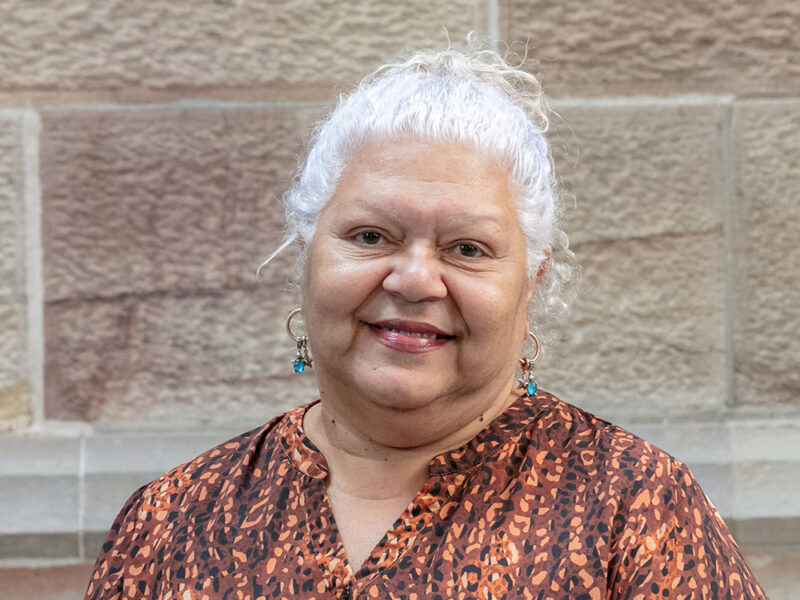
Aunty Leanna Carr-Smith and Pastor Ray and Aunty Sharon Minniecon, alongside Gawura School staff, guided the development of our RAP. The generosity of their sharing, and the leadership and grace shown, cannot be understated.
First Nations people guided the development of our RAP. The generosity of their sharing, and the leadership and grace shown, cannot be understated. From the outset we followed the principles espoused in ‘Our new story’ in our stakeholder engagement.
Learning by doing is risky, when working with a community with high levels of intergenerational trauma. However, existing goodwill and the trust built through the development of ‘A new story’ was sufficient to carry us through the project and beyond. First Nations peoples need for self-determination was heard and understood, and the phrase ‘Not about us without us’ came to be a good shorthand reminder of how to conduct conversations.
The challenge for any non-Indigenous school or organization planning to develop a RAP, is that ‘you don’t know what you don’t know.’ The predominant culture in any school, organisation, region or country does not see its own privilege. And we were not any different. There is a cautionary note here: the time needed to deeply listen and to prayerfully walk in another’s footsteps does not easily fit into a predominantly western, linear, commercially minded, business timeline.
Meet the team
A committed team of First Nations and non-Indigenous staff worked together to bring our Restoration Action Plan to life. The resultant RAP is a testament to their dedication to improving outcomes for our First Nations students, families and staff.
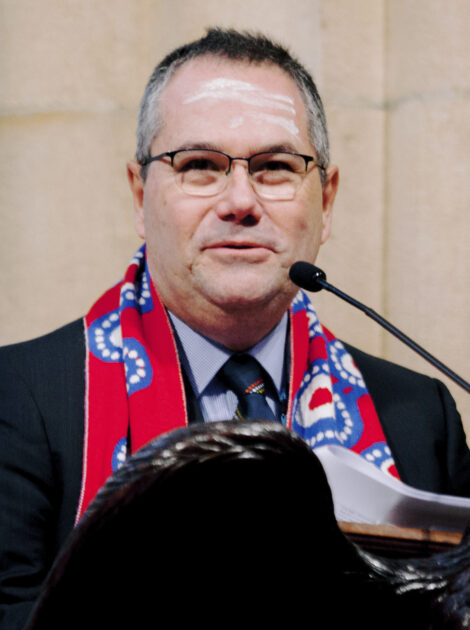
John Ralph
Head of Gawura School

Jackie Isenegger
Director, Strategy & Marketing
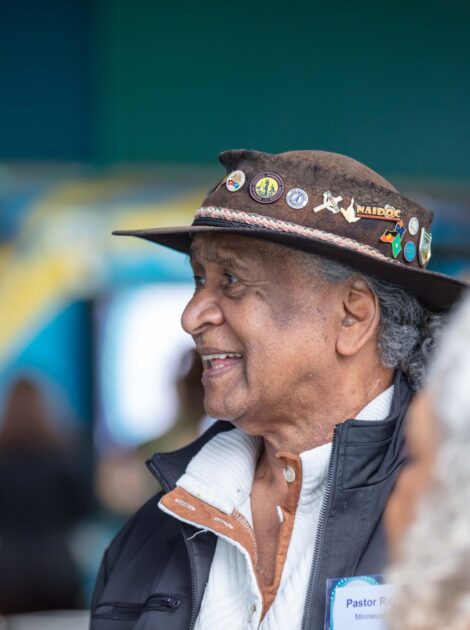
Pastor Ray Minniecon
Co-Founder of Gawura School and School Council member
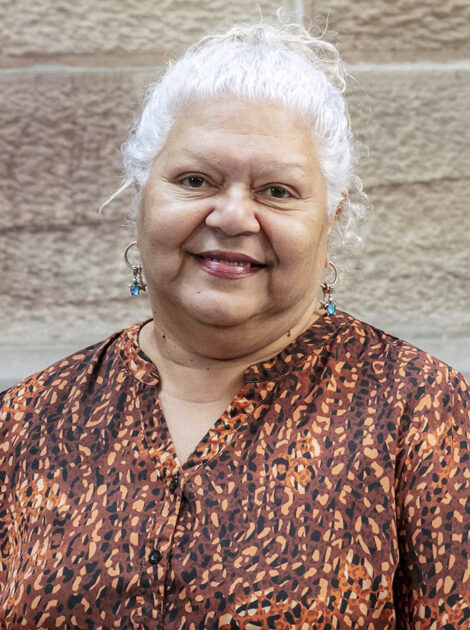
Aunty Sharon Minniecon
Co-Founder of Gawura School and Community Liaison
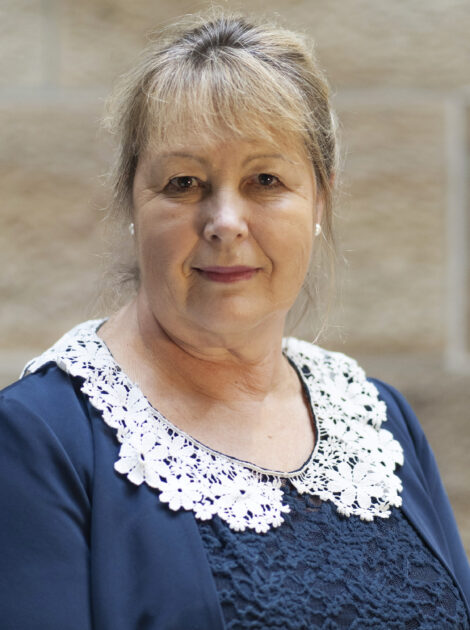
Rhonda Robson
Deputy Headof School (Primary) /Head of Junior School
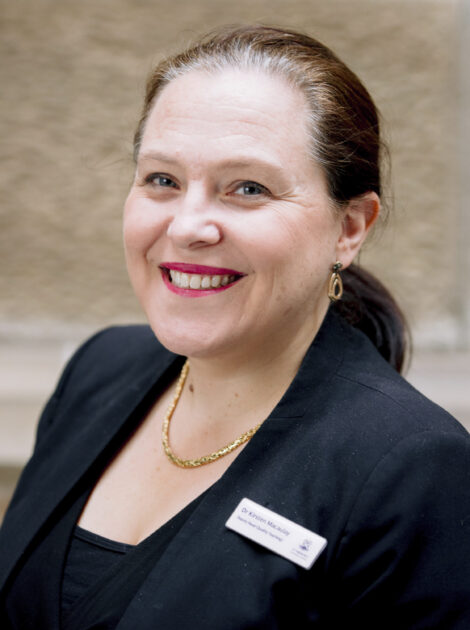
Dr Kirsten Macaulay
Deputy Head, Quality Teaching – K ‑ 12
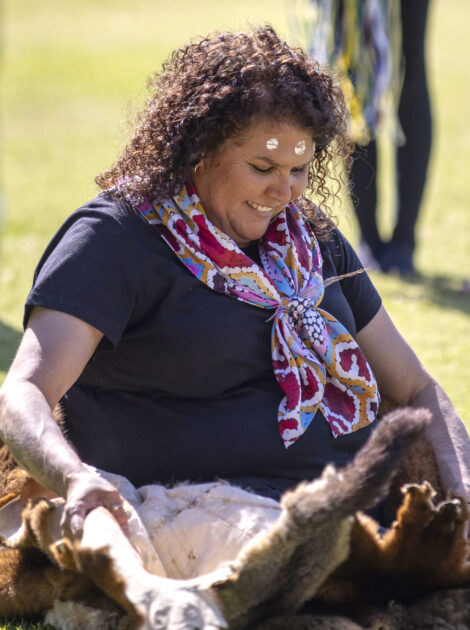
Aunty Leanna Carr-Smith
Former Wiradjuri teacher and Elder in residence
Important role of the School Council and the Senior Executive
This project would not have been possible without the generous support and guidance of successive Chairs of School Council, Heads of School and past and current serving School Council members.
Their willingness to both prayerfully and practically support the implementation of ‘A new story’ will enable its very success:
“We want our First Nations students to be proud of their heritage and hopeful about the future.
We want all of our students, regardless of cultural heritage, to be equipped with a genuine knowledge about, and respect for, Aboriginal and Torres Strait
Islander cultures and histories and a deep commitment to restoration and healing.
We want the example of our Schools to inspire hope and action in others.”
The importance of Allyship
A key ingredient in the successful development of this RAP, we believe, was the passion and commitment created by ‘allyship’.
Many things aligned to enable this RAP to be developed:
- The presence of knowledgeable Elders in Aunty Leanna, Pastor Ray and Aunty Sharon who were willing to so generously share their wisdom, experience and cultural knowledge.
- The Christian intent and relational nature of both Schools, that creates a fertile atmosphere of prayerful reflection, vulnerability and care.
- The unswerving support of successive Heads of School and Chairs of School Council, who understood the need to develop a RAP.
- Societal dialogue around the Voice Referendum that demonstrated the need for action, alongside overwhelming staff, parent and student support.
The key ingredient though, we believe, was the passion and commitment created by ‘allyship’*.
What is allyship? The Merriam-Webster dictionary defines an ally as “one that is associated with another as a helper: a person or group that provides assistance and support in an ongoing effort, activity, or struggle.”
Amy Allerton, Managing Director of Indigico Creative, talked about allyship in her article Being a TRUE First Nations Ally: Are You in an ‘Allyship’ or a ‘Situationship?’ where she wrote, “Being a true ally requires courage, introspection, and genuine humility. It demands that you challenge your own perceptions, biases, and intentions.”
Two such partnerships were evident in the development of the Schools RAP. Aunty Leanna Carr-Smith, as Elder in Residence and Wiradjuri Teacher, partnered with Jackie Isenegger, Director of Strategy and Marketing, spending many hours sharing cultural knowledge, language and life over a number of years.
John Ralph, Head of Gawura School and a proud Gumbayngirr man living on Gadigal land, has had a long-term line management and shared care for the impact of quality education on life outcomes for First Nations families, with Rhonda Robson, Deputy Head of St Andrew’s Cathedral School, who has overall responsibility for the Junior School and Gawura School.
In the broad stakeholder consultation group, these partnerships were pivotal to the drive, vulnerability and passion it took to develop A new story and to then sustain momentum over time to develop actions. Individuals brought their shared history, individual and inter-generational experiences and combined them with a passion for change and social justice derived from deep faith and prayerful reflection.
Amy Allerton again: “Allyship entails deliberate, selfless participation in the ongoing struggles of First Nations communities … standing beside First Nations peoples in their fight for justice, equity, and sovereignty while recognising that this work seeks to uplift their voices—not yours. Allies aim to amplify Indigenous voices while fully acknowledging their privilege and positionality.”
Being a TRUE First Nations Ally: Are You in an ‘Allyship’ or a ‘Situationship’?, Published 24 Feb, Culture, Amy Allerton, Managing Director of Indigico Creative.
Cultural Acknowledgement & Cultural Content and Intellectual Property.
St Andrew’s Cathedral School would respectfully like to acknowledge that we have engaged with First Nations Families from Gawura School and the wider Community in Sydney. We appreciate and recognise them and their individual Nations and Traditional Homelands across Australia.
Throughout this dialogue we appreciated their insight, Cultural expertise and thought-provoking conversations. Accepting that this process is ancient and deeply embedded in ‘truth telling’. We uphold their contributions as part of their Cultural protocols, and wisdom; that has been passed down from generation to generation since ‘time immemorial’.
We value and note their individual Cultural and Intellectual Knowledge as the property of their individual Nations, Country and Lands; and wholeheartedly honour and agree to uphold these Cultural expectations in the ‘spirit of truth telling’.
All Cultural and Intellectual Data shared is collective knowledge across Countries and has been used genetically to contribute to the end result for the betterment of all Australians. ‘It is our Cultural duty to ensure Cultural processes and Cultural Authenticity is upheld for all and future generations to come’, Leanna Carr 2025.